

x-hoppers vs VoCoVo: How the two retail communication platforms compare

What are they?

x-hoppers vs VoCoVo at a glance
| x-hoppers | VoCoVo | |
|---|---|---|
| Core system | Unified platform: DECT headsets + mobile app + PBX/telephony in one | Primarily DECT headset hardware, with telephony as an add-on integration |
| Mobile app | Full iOS/Android app: push-to-talk, hands-free, peer-to-peer calling, chat with auto-transcription | Smartphone use limited mainly to phone calls; day-to-day comms run through hardware headsets |
| AI capabilities |
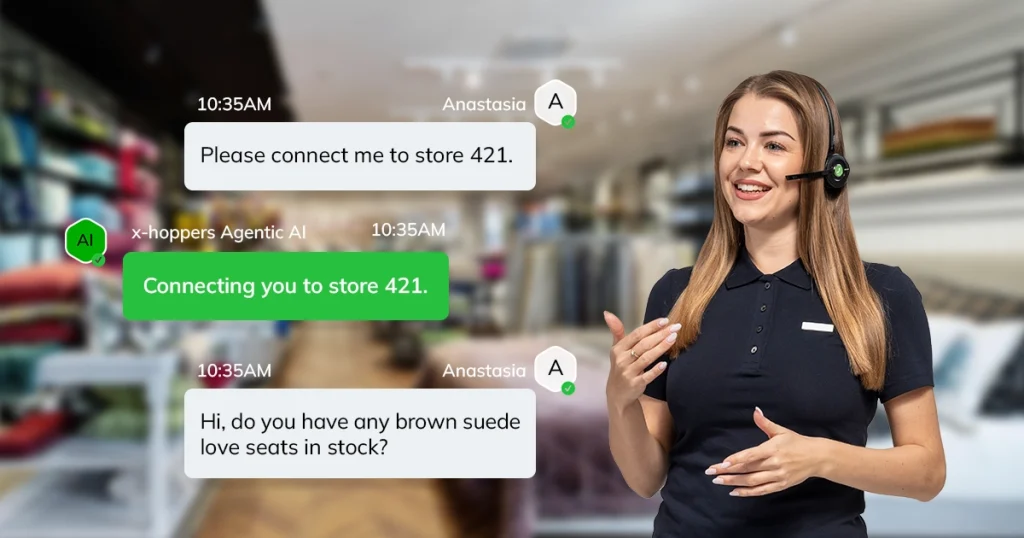
Native agentic AI assistant: voice sign-in, hands-free calling by name, instant product/procedure answers, auto task creation, message drop. Can also integrate with a retailer's own in-house AI systems for retailers who prefer that route. |
No native conversational AI; can connect to external AI systems, but navigation is via physical buttons/keypads |
| Checkout alerts | Digital call buttons added directly to existing POS/EPOS touchscreen — no extra hardware | Dedicated physical keypad (8 segments) mounted at each till, wired or battery powered |
| Customer call points | QR-code smart call points (generate/print in-store) plus support for traditional physical call buttons | Physical call buttons mounted in aisles/service points/click-and-collect areas |
| Cross-store & back office | Mobile app + browser-based web app + desk phones, all unified. Connects shop floor staff to regional teams and call centres | Built around in-store hardware. Connecting beyond the store relies on phone calls rather than a dedicated app |
| Analytics | Speech-to-text transcriptions, AI call summaries, response times, battery health, smart notification tracking all included | VoCoVo Portal provides usage reporting and estate-wide visibility |
| Integrations | 500+ pre-built integrations and open APIs (CCTV, security, POS, self-checkout, task management, smart shelving) | Open API supports integrations with EPOS, self-checkout, and workforce management systems, sending alerts as audio notifications |
| Pricing model | All-inclusive subscription per user/store — no upfront hardware cost, with mobile access, integrations and support all bundled in | Hardware purchased upfront, plus an ongoing subscription on top for standard features |
| Hardware redundancy | x-hoppers is cloud-based with optional 4G and dual-WAN backup, or on-premises where cloud isn't practical or permitted | On-premises appliance gives local redundancy if internet connection drops |
| Support model | Headsets covered under subscription (replacements included); dedicated high-touch support | Standard manufacturer warranty; support level varies by package |
x-hoppers is trusted by:







Pricing models and hardware investment

AI capabilities and the store colleague experience

Checkout alerts and keypads

Customer call points

App flexibility and cross‑store collaboration

Analytics, insights and system integration
Hardware design, redundancy and support
VoCoVo: an on-premises store appliance gives local redundancy if the internet drops, with a dedicated earpiece and a charging cradle that locks securely into place. Entry-level VoCoVo Go is a single-channel voice conference supporting up to 29 devices per base unit. Multi-channel setups require the higher-tier GO+ with a separate Controller unit.
x-hoppers: prioritises flexibility and recognises that one size does not fit all. Retailers can take advantage of a scalable cloud deployment, supported by optional 4G and dual-WAN resilience, or choose an on-premises solution where cloud services are not practical or permitted, offering the best of both worlds.
All deployments provide unlimited conference scalability without restricting channel numbers, while teams can seamlessly combine DECT headsets with Wi-Fi or mobile app access. Headsets are included within the subscription, so replacements for broken or faulty devices are covered, so team members always stay connected.
What retailers are saying about x-hoppers

Heron Foods: building a new standard for communication, safety and compliance
Heron Foods, the UK value grocery chain, is rolling out x-hoppers’ headsets and the mobile app across its store estate to unify communication between the shop floor, back office, regional teams and head office. The platform also integrates with Heron Foods’ existing StaffSafe security system, giving colleagues access to a helpline directly through their headsets during in-store incidents.

See what a unified platform looks like for your stores
Which one fits your business
You might prefer VoCoVo if:
- You want an established, headset‑first system with a large existing UK retail install base.
- Your priority is simple, out-of-the-box hardware with minimal software configuration.
- You're comfortable paying for hardware upfront, with a subscription on top for standard features.
You might prefer x‑hoppers if:
- You want your team's phone to double as a comms device, not just a dedicated headset.
- You want AI built natively into daily workflows, with the option to connect your own AI systems too.
- You'd rather avoid upfront hardware costs, with everything covered in one predictable subscription.
- You need one platform connecting the shop floor, back office, and multiple stores or call centres.
- You're integrating with a wide range of existing store technology, from EPOS to security to self‑checkout.
Frequently asked questions
Is x-hoppers cloud-based or on‑premises?
x-hoppers is cloud-based by default, with optional 4G and dual-WAN backup to keep your team connected even if your primary internet connection drops. An on-premises deployment is also available for stores where cloud services aren’t practical or permitted.
Does x-hoppers work with my existing EPOS or POS system?
How does x-hoppers pricing compare to VoCoVo?
Can I switch from VoCoVo to x‑hoppers?
Do I need new hardware, or can I use my existing headsets?
What AI features does x-hoppers include?
Does x-hoppers integrate with my existing telephony system?
Ready to elevate your sales floor operations?
Want to see how x‑hoppers performs in your stores?
Want to learn more?

A day in the life: Mastering multi‑store management with x‑hoppers
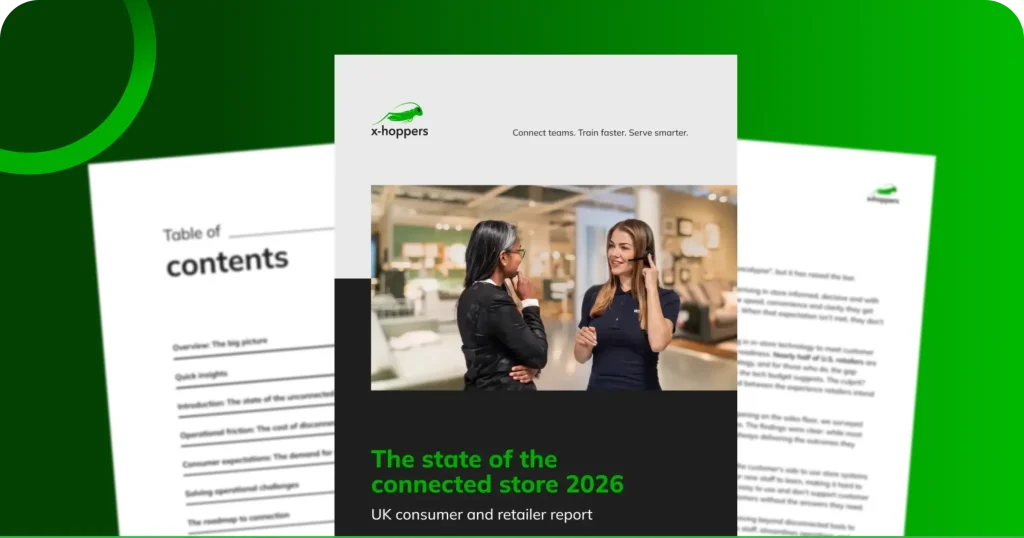
The state of the connected store 2026