


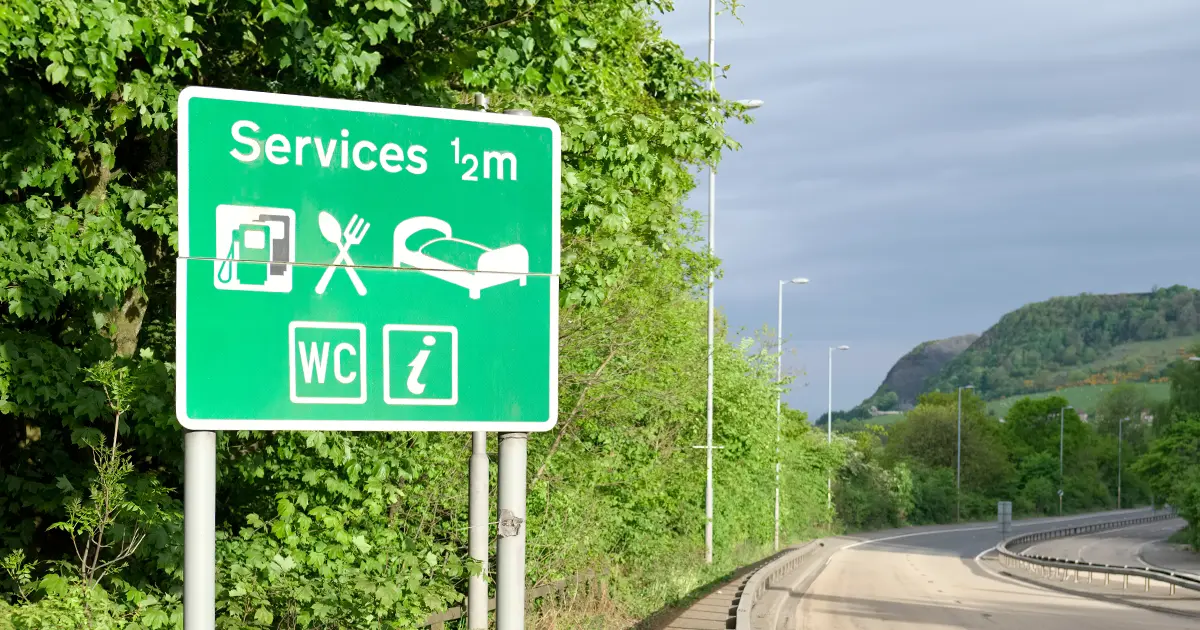
Motorway services (often called travel plazas in the U.S.) aren’t just places to top up your petrol and stretch your legs anymore. Today, they operate as high-volume, multi-functional hubs. Under one roof, you’ve got a fuel forecourt, a convenience store, a hotel and a handful of fast-food and coffee franchises all running under the same management team.
Having all these options under one umbrella is great for boosting sales, but it makes daily operations incredibly complicated. When your retail shop floor, petrol pumps, food counters and maintenance teams are physically spread out and using completely different systems, they end up working in isolated silos.
The moment that communication breaks down, the whole site suffers. Managers spend their entire shift running between different areas just to put out fires, customer service slows to a crawl and potential sales slip through the cracks.
To keep things running smoothly, you have to break down the barriers between these different areas. Here is how a smarter approach to communication can transform a chaotic travel hub into a unified, stress‑free operation.
What disconnection actually costs you
In a traditional high street shop, a delay in communication might just mean it takes a little longer to restock shelves. But at a busy motorway service area, a communication gap can lead to bigger issues.
Let’s imagine it’s a busy bank holiday weekend and even just one of the following happens:
- A fuel pump cuts out, or a till goes down, but your maintenance team is stuck on the other side of the site and has no idea there's an issue.
- A coach pulls up, and a massive queue suddenly forms at the tills, but the staff working in the back room out by the pumps are completely cut off and don't know they're needed for backup.
- One of the fast-food franchises runs out of a core ingredient and needs a manager to sign off on pulling stock from the main warehouse, but the frontline team can't reach the manager.
In each of these situations, timely communication makes all the difference between providing exceptional service and frustrated, disappointed customers.
When your teams are relying on old-school walkie-talkies or disjointed communication tools, messages get lost and small issues can quickly snowball into operational chaos.
Connecting your entire footprint
Connected motorways services start with connected frontline colleagues. They are your eyes and ears into what’s happening on site, so why not equip them with a tool that not only lets them collaborate with colleagues, but connects them to the entire business?
Here’s what that looks like.
1. Targeted communication
With standard radios and retail headsets, everyone hears everything, resulting in endless chatter that staff eventually tune out. However, with a smart retail headset solution, like x‑hoppers, you can create targeted broadcast channels for the petrol station, fast-food franchises, different retail shops, the hotel and even security, ensuring that the right message goes to the right team at the right team. But that doesn’t mean everyone is isolated — far from it. Colleagues on a dedicated channel can easily switch to another broadcast by simply giving a voice command to the headset, and that’s it. No need to learn a list of different channel numbers; all they need to do is ask for the team broadcast they want to join and they’re in.
Alternatively, if you’d rather everyone stay on the same broadcast, you can also set up either skill or role-based tags to individual users, allowing you to send dedicated messages or system notifications to just that group. For example, you can set up a QR‑code-based call point at a check‑in desk that will send alerts only to front-desk trained colleagues or message just first aiders in the event of injury or health incident. That way, everyone can collaborate easily across the entire site, but also don’t suffer from notification burnout.
2. Real-time management visibility
Managing a complex multi-zone hub shouldn’t require walking 20,000 steps a day just to check on operations. Putting on a smart headset can help, but then managers only know about what they hear. The moment they take off the headset or switch to another broadcast, they’re in the dark.
Imagine instead a headset system that also has a connected mobile and web app, letting managers stay in touch with their teams wherever they are. How? In a few different ways:
- Message drop: Managers can type or record a message and schedule it to play into specific headsets whenever the user signs on. It’s an easy way to make sure important updates are shared with team members, even if they work opposite shifts.
- Real-time transcriptions: From one mobile app, managers can see live transcriptions of what’s being said over the headsets, allowing them to quickly check up or review what’s happened in a shift, without having to personally interview different staff members.
- Push-to-talk on mobile: Managers don't have to rely on headsets to be part of the conversations. By using the push-to-talk function on an app, managers can join a conversation from anywhere, allowing them to answer questions, coach staff or pass on time sensitive information from their smartphone.
Additionally, through those same mobile and web apps, managers can get more detailed information, such as real-time analytics on headset status, system notifications, user metrics and even AI responses, as well as searchable transcriptions.
Think of not only how easy it would be to coordinate different teams, but how much clearer managers’ picture of the site would be. They’d have the metrics to see what’s working and what isn’t, allowing them to provide data-backed coaching to employees and ensure consistency across departments and even the whole organisation.
3. Instant access to knowledge
Whether a colleague is operating a fuel desk, serving hot food or restocking shelves, they can easily be blindsided by a customer question or a complicated procedural task — especially if they’re new.
With a retail headset solution that also has embedded AI that runs on natural speech commands, your colleagues can instantly find the information they need without ever leaving a customer’s side. And yes, that does include being able to ask the AI for information and procedural walk-throughs, but it also means that they can explain the issue and ask the AI assistant to connect them to the best contact (even if they don’t know their department or name).
This is powerful because it means that even on a lone or sparsely staffed shift, colleagues always know they can find the information they need. That means tasks don’t get left for “more experienced staff” and customers aren’t given the wrong answer. It also means staff can learn about new products or procedures through their headsets, making it easier to schedule training and keep staff up to date without removing them from the shop floor.
4. Smart task management
When you’re managing a site that spans from a forecourt to a food franchise, keeping track of daily to-do lists is a massive challenge. Paper checklists get lost, screens used to manage task management solutions get put down or cause a distraction and verbal handovers between shifts easily get forgotten.
A smart communication system changes this by turning task management into a live, interactive workflow right through the headsets. All it requires is an integration with your task management solution and a few key features:
- Message scheduling: Instead of managers having to constantly ask teams to do routine checks, the system can automatically play scheduled task reminders directly into the relevant headsets at specific times of the day.
- Hands-free updates: With a task management integration, staff don't need to stop what they're doing to tick a box on a clipboard. They can simply speak into their headset to hear their tasks, mark a task as complete, update a project's status or flag an issue that needs a manager's attention.
- Dynamic re-routing: If a system notification is picked up by the AI and it creates a task, such as a temperature alert from a smart freezer, the system can instantly route that task to the nearest available team member or even to the maintenance team, ensuring issues are dealt with before they cause a problem.
By embedding task management into your communication solution, you take the pressure off your managers, improve compliance and ensure everyone knows exactly what they need to be doing, and when.
5. Communication between sites
Operational silos don’t just exist within one site; they also exist between your different locations — even if they’re just down the road. Imagine if, from either headsets or an app, one site could call the other, using the same communication system they’re already on. This means they could share:
- Early traffic warnings: If a service station on a major motorway experiences a sudden, massive influx of traffic, managers can instantly give the next station in their network a heads-up. This gives the upcoming site a 30‑minute window to open extra checkouts, prep food counters and get staff into position before the rush hits.
- Proactive inventory updates: If your forecourt runs out of a specific fuel grade or your main shop runs dry on a high-demand item, your team can alert local stations further down the road. They can prepare for a spike in demand on their end, ensuring their tanks and shelves are fully prepped to capture the extra business.
When your communication connects your teams beyond just a single site footprint, you stop getting blindsided by the unpredictable nature of motorway traffic. Your teams can anticipate demand, manage expectations and keep your service seamless across the whole network.
Why x-hoppers is built for this complexity
When you look at everything a modern motorway services requires, standard retail communication tech falls short. Traditional walkie-talkies only add to the noise, and basic headsets keep your staff trapped in isolated bubbles.
That is where x‑hoppers completely redefines frontline operations. It isn’t just a retail headset system; it’s a complete, smart retail communication platform designed specifically to handle multi-functional, high-volume environments. By bringing your physical teams, your digital tools and voice-first AI together into one lightweight wireless headset, x‑hoppers bridges the gap between your different franchises and zones. It gives you the complete, site-wide connectivity required to run a multi-million-pound estate while helping you remove operational blind spots.
Driving consistency across your estate
At the end of the day, motorway service areas are unique, fast-moving environments where convenience and speed are everything. Regardless of the specific technology or solution you choose to deploy across your sites, one thing remains certain: streamlining your internal communication and connecting your frontline staff directly to your business systems is the single best way to provide outstanding service and protect your revenue.
When you break down the physical and digital silos between the forecourt, the shops and the food counters, you remove the daily friction that wears down your staff and slows down your service. By giving your teams a clear, connected way to collaborate, you can ensure that no matter how busy a peak travel period gets, your estate delivers a smooth and consistent customer experience every single time.
Ready to break the silos and connect your teams? Speak to a member of our team to discover how x‑hoppers can help you not only connect your teams, but power truly connected sites.