



If you’re wondering how to increase sales in retail right now, you’re not alone. Rising costs and global instability mean that customers are more likely to delay or forgo purchases than they were just five years ago. And on top of that, their expectations have grown. It’s not enough to just have polite associates and well-presented stores; customers expect seamless experiences, instant answers and personalized service whether they’re shopping online or in any of your stores.
The good news? There are still actions you can take to move the needle. The strategies to increase sales in retail that work today combine smart technology, empowered staff and a deep understanding of customer behavior. Whether you run a single boutique or manage a national grocery chain, the principles are the same — the execution just looks a little different.
In this guide, we’ll walk through seven proven ways to increase retail sales, covering everything from store layout to AI-powered assistants. We’ll also share specific tactics for clothing, pharmacy and electronics and grocery retail, plus answer the most common questions retailers ask about growing revenue.
Let’s dive in!
1. Create an unforgettable customer experience
Today’s shoppers want to be recognized as more than just a transaction, but as a person with preferences, habits and specific needs.
Which is why you should:
• Embrace personalization. Use data to offer personalized recommendations and promotions, helping to make your customers feel seen and understood.
• Master omnichannel integration. Ensure a seamless experience whether a customer is shopping on their phone, on your website or in your store. Make sure you integrate your online and offline strategies with features such as “buy online, pick up in store” (BOPIS).
• Think mobile-first. Over 70% of retail traffic now starts on a mobile device. That means your mobile experience can’t be just an afterthought because it’s often your first impression. Optimize for speed, simplicity and easy checkout. And don’t forget that mobiles are used in stores as much as at home. Capture that audience with QR codes, scan-to-purchase and mobile loyalty apps designed to reduce friction and boost conversion.
2. Empower your greatest asset: Your team
Your frontline team is the face of your brand. When they’re empowered, they can create amazing experiences that directly relate to increased sales.
- Supercharge product knowledge.
A confident employee is a great salesperson. Using continuous training methods ensures your team members are experts on what they sell. One way to do this is to use AI‑powered assistants, which — whether accessible via a screen, a handheld device or delivered through a wireless communications solution — give staff instant access to the information they need the moment they need it.
- Give them authority.
Empower your staff to make on-the-spot decisions to solve customer problems. This builds trust and turns potentially negative situations into positive ones.
- Connect your team instantly.
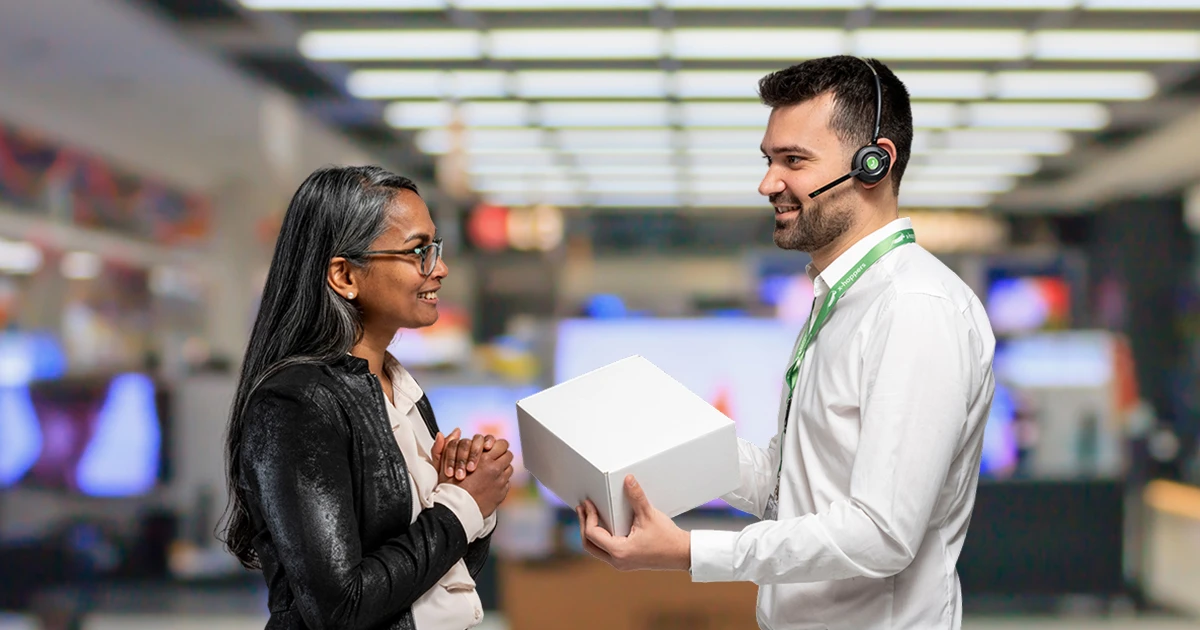
Nothing frustrates a customer more than waiting for an associate to hunt down an answer. Which is why employee communication tools that improve response time are no longer a nice-to-have; they’re essential. Consider implementing a solution like x‑hoppers that connects your entire team via wireless headsets, allowing them to get stock checks and assistance in seconds, not minutes.
3. Use technology to fuel your growth
Technology is one of the most creative ways to increase retail sales when used correctly. The trick is to make sure you don’t choose technology for technology’s sake, but implement solutions that tackle real problems and reduce friction in the buying process.
Some proven tactics include:
- Leveraging AI assistants.
Equip your team with tools that can answer questions instantly. When an associate can ask an AI assistant for product specs or inventory status, they can spend more time engaging with the customer and closing the sale.
- Providing real-time inventory visibility.
Connect your inventory system to your team’s communication devices. Knowing instantly whether an item is in the backroom or at another location is a game-changer for customer service.
- Using data-driven decision making.
Use your in-store systems, such as smart call points or computer vision, to track customer behavior and analyze your conversion rates. The more you understand why people are buying (or not buying), the smarter your decisions will be.
4. Get smart with your store and stock
Your customers can’t buy if they can’t find what they want. That’s why not only stock levels but presentation play such a massive role in guiding customer behavior.
- Master visual merchandising.
Create eye-catching window displays and strategically place popular products to draw customers in and guide them through the store. Don’t forget to change them to match the season to stay relevant and to keep things fresh. And make sure you have an easy way to share inspiration, plans or layouts with all of your stores. It shouldn’t just be your flagships with displays that draw in customers.
- Optimize your store layout.
Analyze your sales per square foot to understand what’s working. From there, design a layout that puts your high-margin items front and center and creates a natural, enjoyable flow for shoppers.
- Ace your inventory optimization.
Use data to reduce stockouts on popular items and minimize dead stock. Managing seasonal demand effectively means you’ll have what customers want, right when they want it.
5. Staff for success, even during peak
Having the right people on the floor at the right time is one of the most powerful sales strategies. Getting it wrong means long lines, frustrated customers and abandoned baskets. Getting it right means a smooth, profitable and stress-free peak period.
So how do you do it the right way?
- Schedule smarter.
Dive into your sales data to pinpoint your true peak hours for each day of the week and season. Build your schedule around these patterns, ensuring your best-performing and most knowledgeable associates are on the floor when the most valuable sales are happening.
- Prioritize customers over tasks.
Create a clear rule: during peak hours, customer assistance comes first. Encourage your team to use staff communication tools to instantly call for backup at the checkout or assistance on the floor. With a system like this, they can focus on serving the customer in front of them, and go back to restocking shelves whenever it quiets down.
- Maximize your team's agility.
A connected team is an agile team. When your staff can instantly communicate without leaving their post, they can solve problems in seconds. Instead of an associate leaving a customer to find a manager for a price check, with a wireless wearable communication device, they can get an answer immediately, keeping the sale moving and the customer happy.
6. Build loyalty and drive action
Getting a new customer is great, but if they only shop with you once, that’s a fluke — not a loyal customer. The trick is to get them to come back for more.
- Create a killer loyalty program.
Reward your best customers and give them a reason to choose you over the competition. This is one of the most effective ways to increase sales in retail.
- Run smart promotions.
Leverage limited-time offers, bundle pricing and strategic discounting to create excitement and entice people to open their wallets and start spending.
- Master urgency (without being pushy).
Use phrases like “limited stock” or “seasonal special” to encourage immediate purchase without damaging your brand’s perception.
- Increase cross-selling and upselling.
Use AI-powered recommendations via your in-store customer-facing technology, such as digital screens, apps and smart carts, or equip your team with tools that give them the information they need to suggest complementary items, increasing the average transaction value. For example, a customer buying a pair of shoes could be instantly offered matching polish or laces, either through a digital nudge or a friendly conversation with a store associate.
7. Tailor your approach by store format
Different store setups and brand directions need different sales strategies. What works for a large department store to help it increase retail sales, small business retailers may find unsuitable or out of reach. Let’s take a closer look at what works for different store formats.
Fashion
- Use digital fitting room tools, such as smart call points or smart mirrors, to reduce return rates and increase confidence at checkout.
- Train staff on outfit-building to boost their knowledge and ability to advise customers, naturally increasing units per transaction.
- Run "buy the look" merchandising with accessories and layering items displayed together.
- Ensure your loyalty program ties to style profiles to keep customers engaged between seasons.
Pharmacy
- Encourage employees to cross-sell complementary health products with AI‑assisted recommendations through an in‑store communications solution.
- Use subscription or repeat-prescription reminders to drive foot traffic.
- Clear, educational signage on new or over-the-counter products reduces staff time and builds trust.
Grocery
- Use endcap displays and promotional islands for high-margin impulse items.
- Offer free recipe cards and use meal-kit merchandising to increase basket size.
- Leverage dynamic pricing on near-expiry items to reduce waste and capture value.
- Drive repeat visits and track behavior with loyalty programs and digital coupons.
Electronics
- Create hands-on zones or train staff to give live demos, as they are proven to increase conversion significantly. If customers can touch products, they're more likely to buy.
- Upsell extended warranty and protection plans at checkout for a quick, high‑margin win.
- Offer bundle pricing (device + accessories + protection) to increase average transaction value (ATV).
- Invest heavily in product knowledge training for your staff. Their expertise is your differentiator.
Conclusion: Your path to higher sales starts with a connected team
As you can see, there are many powerful strategies to increase sales in retail. But they all have one thing in common: they rely on a well-informed, efficient and empowered team to execute them.
This is where x-hoppers makes all the difference. By connecting your frontline staff with each other, with your back-office systems and with an AI assistant, you give them instant access to the information they need to excel.
So, if you’re serious about how to increase sales in retail stores, start with your team. Give them the tools, information and communication infrastructure to perform at their best — and the sales will follow.
Ready to see how a truly connected team can transform your sales floor? Speak to our team to discover how x‑hoppers can help you sell smarter.
Frequently asked questions
What is the fastest way to increase sales in a retail store?
The fastest wins usually come from improving conversion rather than driving more traffic. Focus on three things immediately: staff product knowledge (so they can answer questions and make relevant suggestions), reducing friction at checkout (shorter queues, more payment options) and activating any lapsed loyalty members with a targeted re-engagement offer. These can show results within days, not months.
How can small retail businesses increase sales without a large budget?
For a small business looking to increase retail sales, focus on low-cost, high-impact strategies. Optimize your store layout, improve your visual merchandising with creative displays and focus on building a strong customer loyalty program. Leveraging free social media tools to engage with your community is another great, budget-friendly tactic.
What role does technology play in increasing retail sales in 2026?
Technology plays a substantial, but supporting, role. The best retailers use technology to empower their people, not to replace them. AI assistants can provide instant product knowledge, data analytics offer insights into customer behavior and communication tools connect teams for ultimate efficiency. This allows staff to provide faster, smarter and more personalized service that directly drives sales.
How do you increase sales in a retail grocery store specifically?
For grocery, basket size and visit frequency are the two key levers. To increase basket size: use meal-kit merchandising, cross-category promotions and recipe-driven endcaps to inspire multi-item purchases. To increase frequency: build a genuine loyalty program with personalized digital coupons, use push notifications for flash offers and invest in a buy online, pick up in store service that brings online shoppers back to the physical store. Managing shrinkage and near-expiry markdowns also protects revenue without sacrificing margin unnecessarily.